

Written by Dr. Candace Cheah, Veterinary Assistant
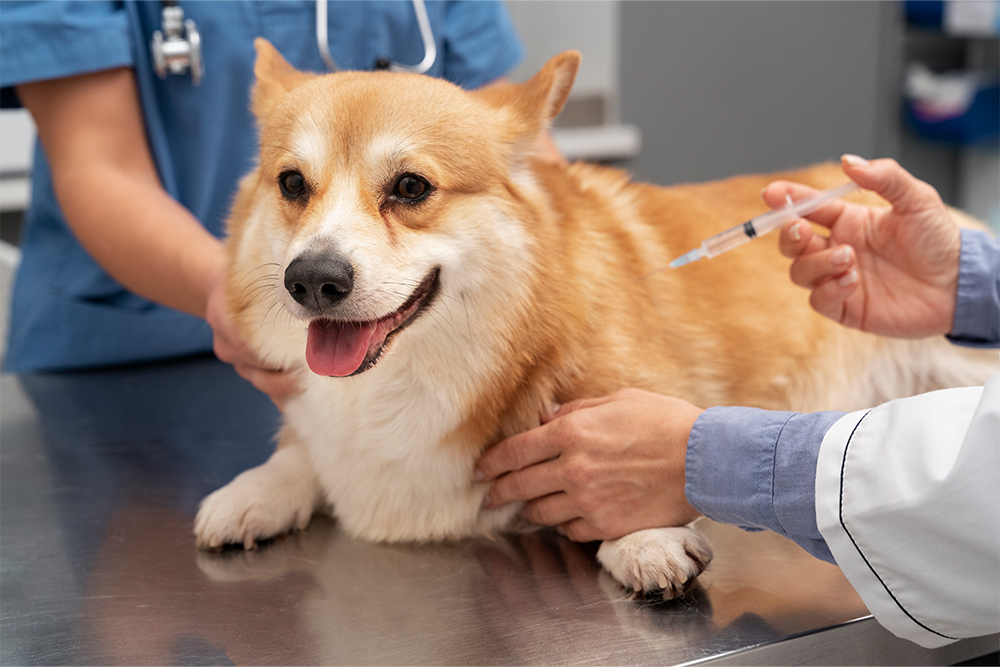
Vaccines protect dogs from serious and potentially life-threatening infectious diseases. They stimulate the immune system so your dog is prepared to fight infections before exposure happens. Most vaccines are given by injection under the skin, though some (like kennel cough) may be given as a nose spray or orally.
Core Vaccines
Recommended for ALL dogs
These protect against diseases that are widely distributed and dangerous, and should be given to all dogs unless there’s a specific medical reason not to:
- Canine Distemper Virus (CDV)
- Canine Adenovirus (CAV-2) — protects against hepatitis
- Canine Parvovirus (CPV-2)
- Rabies — core where rabies is endemic (especially in East Malaysia) or when required by law
- Leptospirosis — considered core in regions where the disease is present and vaccines are available because it is zoonotic (can spread to people) and serious.
These vaccines provide long-lasting protection.
Non-Core Vaccines
These are recommended based on your dog’s environment, lifestyle, and exposure risk:
- Boards or goes to daycare
- Attends grooming or training
- Travels or meets many dogs
- Has wildlife or outdoor exposure
The following non-core vaccines are:
- Bordetella bronchiseptica (kennel cough)
- Canine Influenza Virus (flu)
- Borrelia burgdorferi (Lyme disease)
- Canine Parainfluenza Virus (CPiV) — often included in combo vaccines
Vaccination Schedule
Puppies:
Puppies would generally need a total of 3-4 doses of vaccination, they start from:
- 6–8 weeks (~2 months old): First core vaccine (distemper/adenovirus/parvo/lepto combo)
- Every 3–4 weeks until ≥16 weeks (4 months old): Complete core series
- At 12–16 weeks: Rabies vaccination (timing may be regulated by local law)
- Non-core vaccines: Start as early as label allows (often 8+ weeks) if risk justifies.
Puppies that are ≥16 weeks old and adult dogs:
- If the adult dog has no or unknown vaccine history, the core vaccines (distemper/parvo/adenovirus) are given 2 doses, 2–4 weeks apart
- Rabies: Single dose, with booster timing based on local regulations or vaccine label.
- Non-core vaccines are determined by risk assessment and are admin
Why Do Puppies Need More Than One Vaccine Dose?
Puppies receive early protection from their mother through maternal antibodies. Maternal antibodies are protective antibodies passed from a mother dog to her puppies, mainly through the first milk (colostrum) shortly after birth.
They help protect puppies from disease during the first weeks of life, before the puppy’s own immune system is fully developed. However, these antibodies fade over time and can also interfere with early vaccinations, which is why puppies need a series of vaccines as they grow.
Giving vaccines in a series helps cover this gap and interference. The first dose introduces the immune system to the disease, and later doses strengthen and complete protection. Most puppies develop full, reliable immunity about 1–2 weeks after their final booster at 16 weeks old.
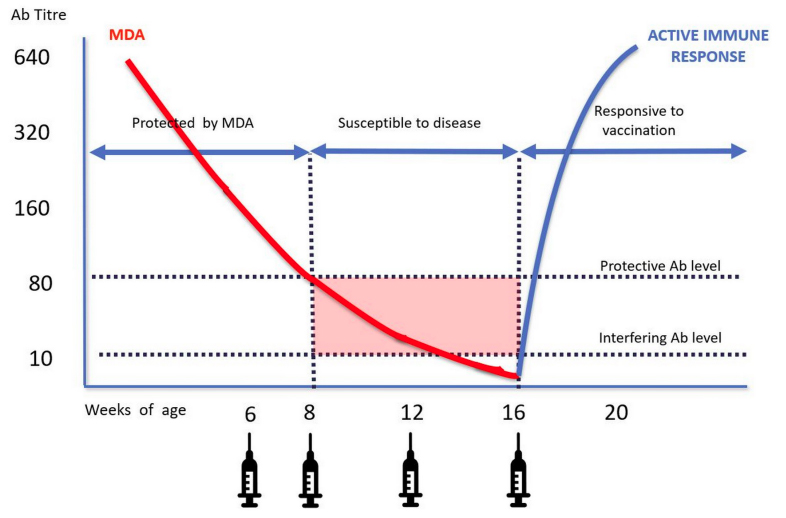
Puppies get antibodies from their mom (through colostrum). These are called (MDA) and protect the puppy early on. These antibodies can also block vaccines from working if given too early. The graph shows that as MDA gradually decreases, there’s a period where the puppy is susceptible to disease but vaccines might not work yet. This is called the “window of susceptibility” shown in red. Thus, puppies are given vaccines at the start of that window.
Revaccination Guidelines
- Core vaccines: After completing the puppy series and the first booster (6–12 months), core vaccines generally do not need to be given more than every 3 years — because immunity lasts for years or even a lifetime in many dogs.
- Non-core vaccines: Typically recommended annually because duration of immunity is usually shorter.
- Rabies: Booster timing varies by law and vaccine used (1-year vs. 3-year products).
Remember: over-vaccinating does not mean better protection. Modern guidelines focus on:
- Protection
- Safety
- Individual risk
Types of Vaccines
In Malaysia, your veterinarian may recommend one of the different combination vaccines, such as 6-in-1, 7-in-1, 9-in-1, and 10-in-1 depending on their lifestyle and risk assessment.
All of these combos cover the essential core vaccines for CDV, CAV and CPV. The extra components in each combination help protect against other germs, giving your dog broader protection in one convenient shot. Combination vaccines protect your dog against multiple diseases in one shot, making vaccination easier and less stressful.
Here is an example of the coverage given for some combinations:
| 6-in-1 Vaccine | 9-in-1 Vaccine | 10-in-1 Vaccine |
| Protects against: 1. Distemper 2. Parvovirus 3. Adenovirus (Hepatitis) 4. Parainfluenza 5. Leptospirosis (2 strains) |
Protects against: 1. 1Distemper 2. Parvovirus 3. Adenovirus (Hepatitis) 4. Parainfluenza 5. Leptospirosis(4 strains) |
Protects against: 1. 1Distemper 2. Parvovirus 3. Adenovirus (Hepatitis) 4. Parainfluenza 5. Leptospirosis(4 strains) 6. Coronavirus |
How Vets Decide What Your Dog Needs
We considers:
- Age
- Health status
- Lifestyle
- Local disease risk
- Legal requirements
Vaccination plans are customised — not one-size-fits-all
What Happens If I Do Not Vaccinate My Dog?
Your dog would be at risk to get very sick from a very young age. Without vaccines, dogs are at high risk of severe illness or death. All of these diseases are preventable with vaccination. Vaccination not only protects your dog but also keeps your family safe, especially from rabies. Here are the clinical signs of these diseases:
Canine Distemper Virus (CDV)
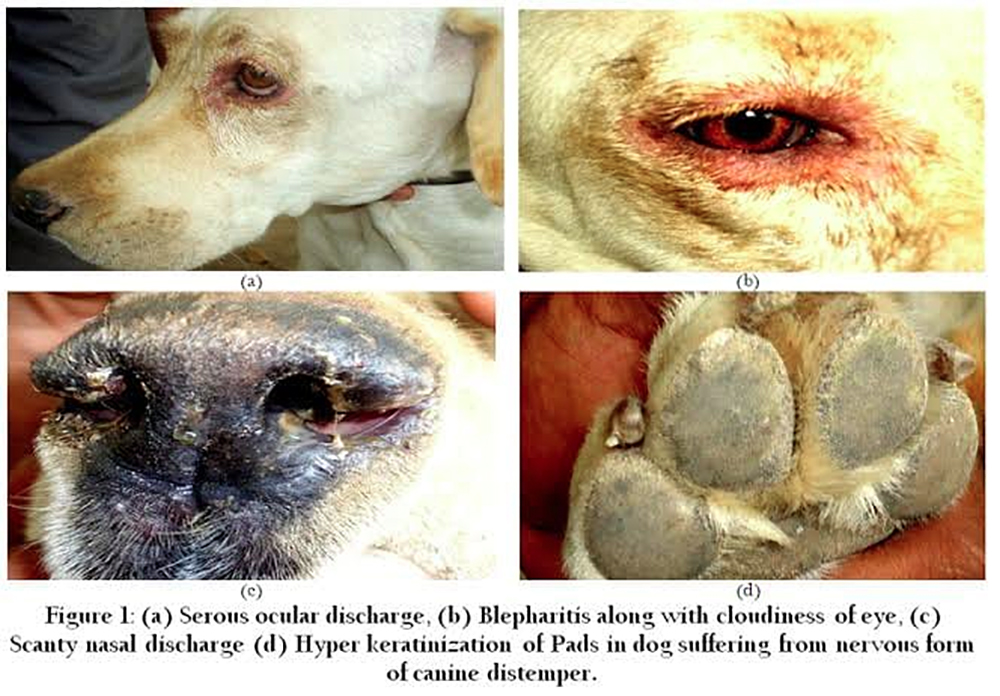
Canine distemper can affect many parts of the body, so symptoms can vary. Common signs include fever, coughing, nasal discharge, vomiting, diarrhea, and in some cases, eye problems or neurological signs like twitching or seizures. It can be fatal, especially in puppies or unvaccinated dogs.
Canine Parvovirus (CPV)
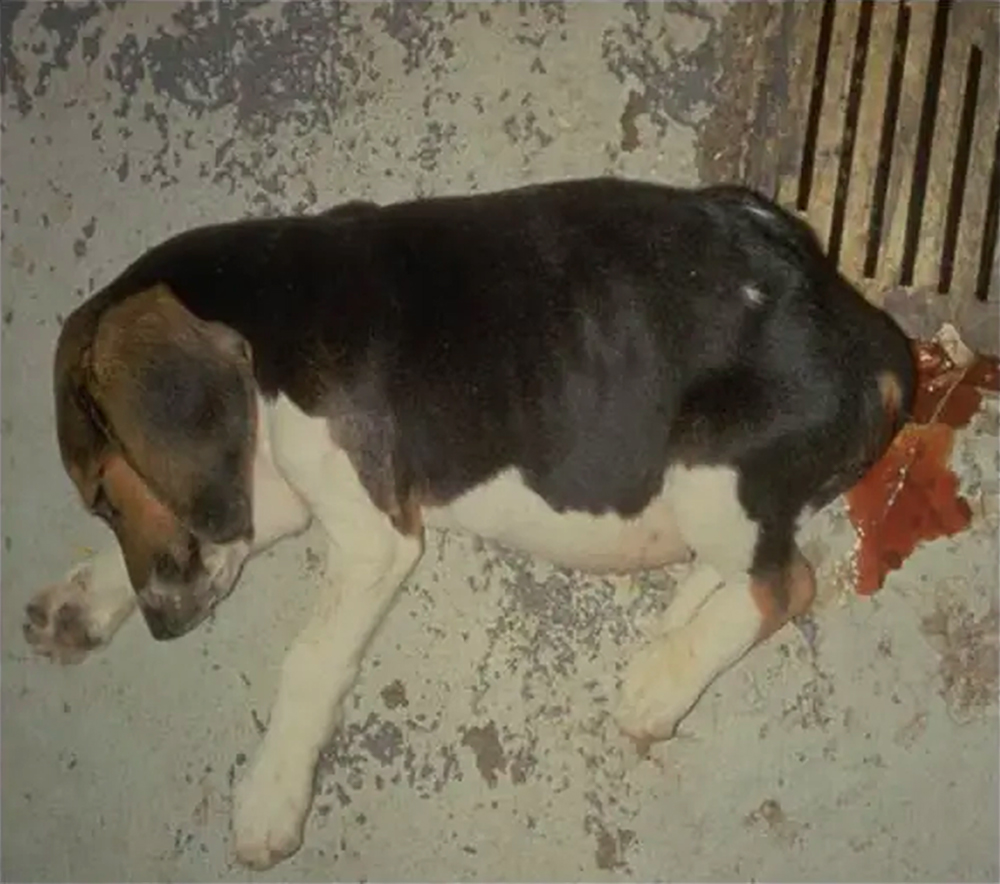
Parvovirus is highly contagious, particularly in unvaccinated puppies and adults. It mainly attacks the gastrointestinal tract, causing severe diarrhea, vomiting, poor appetite, and rapid dehydration, which can be life-threatening if untreated.
Canine Adenovirus (CAV-1 & CAV-2)
- CAV-1 causes infectious canine hepatitis, affecting the liver. Signs include fever, lethargy, vomiting, and jaundice.
- CAV-2 primarily causes respiratory disease, leading to coughing, nasal discharge, and bronchitis. Vaccines often use CAV-2 to protect against both forms safely.
Rabies
Rabies is always fatal in dogs and humans. Early signs include behavior changes, unsteady walking, drooling, and facial muscle spasms. Aggression or unusual friendliness can occur, which is why it’s sometimes called “penyakit anjing-gila” locally. Vaccination is the only reliable protection.
Leptospirosis
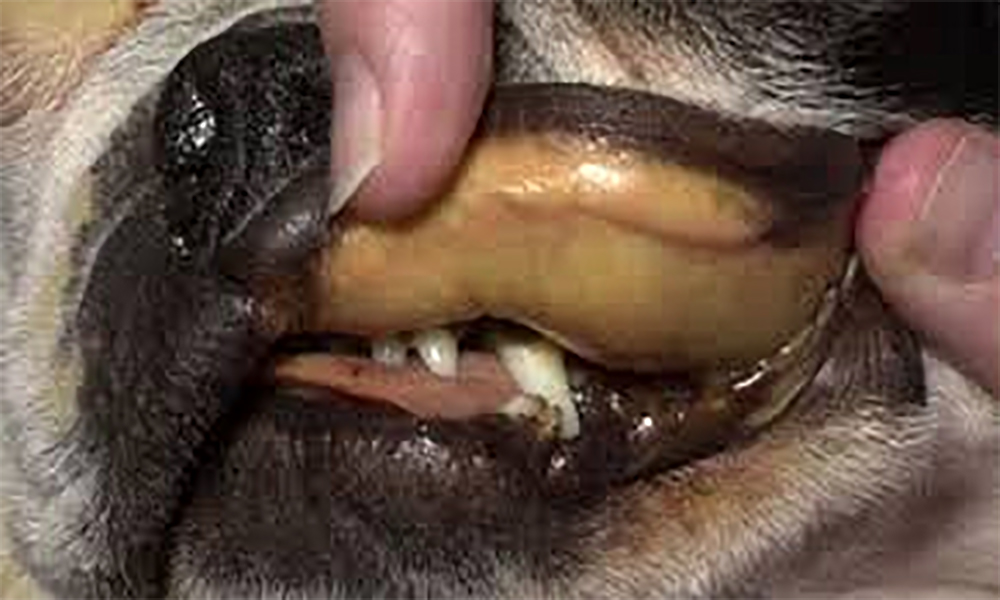
Leptospirosis is a bacterial infection that can affect a dog’s kidneys, liver, and sometimes lungs. Dogs can show a few different signs, and not all dogs get sick in the same way. Common signs include tiredness, loss of appetite, vomiting, diarrhea, fever, increased thirst or urination, and yellow gums or eyes.
Key Takeaways for Owners
- Core vaccines protect against deadly diseases
- Vaccines are not a one-size-fits-all, and it depends on the need of your dog
- Puppies need multiple doses early
- Always discuss lifestyle & risk with your vet